How International Is Okinawa?
If you're curious about Okinawa, ask how international it feels and you'll get two very different answers depending on who you ask. Some travelers describe it as the most foreigner-friendly corner of Japan, a place where the signs make sense, the staff smile in English, and root beer is on the menu. Others land expecting a slice of America in the tropics and are surprised to find a subtropical island that is unmistakably, deeply Japanese.
Both are right. And the reason they're both right is the whole story.
Okinawa is arguably Japan's most visibly cross-cultural prefecture, not because it's been Westernized, but because it's layered. A roughly 450-year independent kingdom, a Japanese takeover, twenty-seven years under American administration, and a large ongoing U.S. military presence have all left their marks, one on top of the other. The result feels different from Tokyo or Kyoto in a way that's hard to name until you're standing in it.
So let's answer the question properly in this Okinawa travel guide: how international is Okinawa, really, and what does that mean for your trip to Japan?
What "international" actually means in Okinawa (and what it doesn't)
It helps to clear up two myths right away.
The first is that Okinawa is basically an American theme park with palm trees. It isn't. In most parts of Okinawa, everywhere outside a handful of neighborhoods near the bases, daily life runs in Japanese, on Japanese rhythms, with Japanese customs.
The second myth is the opposite, that Okinawa feels exactly like mainland Japan. It doesn't. Sitting far out in the East China Sea, the main island alone is a world away from the rest of the country in feel. The food is different, the music is different, the pace is slower, and the cultural DNA traces back to a kingdom that spent centuries trading with China and Southeast Asia long before it was folded into Japan.
"International," in Okinawa's case, doesn't mean English-speaking or Americanized. It means layered, a genuine blend of Ryukyuan, Japanese, and American influences that coexist rather than cancel each other out. Understanding those layers is the key to understanding the place.
The three layers: Ryūkyū, Japan, and America
Ryūkyū roots (1429–1879)
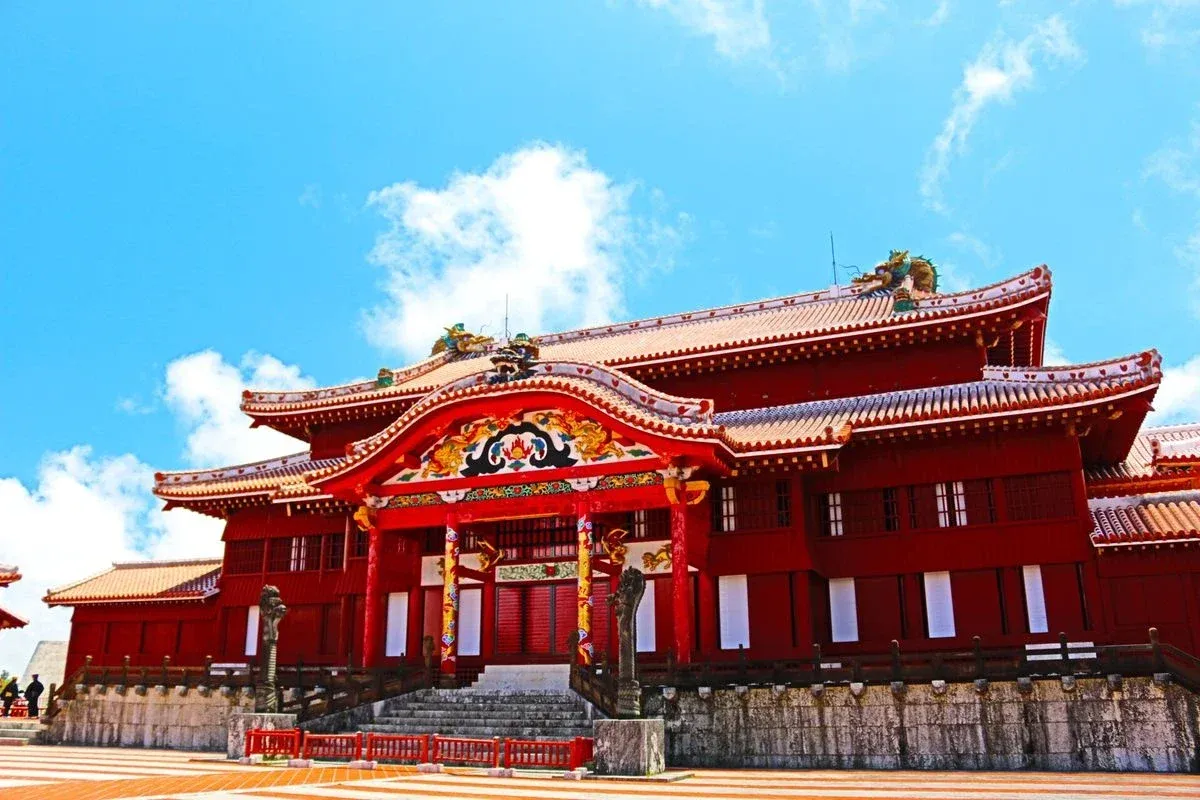
Long before it was a Japanese prefecture, this was the Ryūkyū Kingdom, an independent island nation that, by tradition, was unified under King Shō Hashi in 1429, with its royal capital of Shuri in what is now Naha. (Some historians place the emergence of a truly centralized state a century later, but 1429 is the date you'll see in museums and on signage.) The old Ryukyuan gusuku castle ruins are today recognized as UNESCO World Heritage sites, while Shuri Castle, its main hall still being rebuilt after the 2019 fire, with reopening targeted for late 2026, so confirm before visiting, remains the symbolic heart of the former kingdom.
For around 450 years, the kingdom thrived as a maritime trading hub, its ships threading past reef and open ocean, connecting China, Japan, Korea, and Southeast Asia. It paid tribute to imperial China and absorbed influences from everywhere its ships sailed. That outward-facing, trade-driven history is where Okinawa's distinct food, music, crafts, and architecture come from, the vivid bingata textiles, the sanshin, even the dragon boat races that echo those old Chinese ties. It's also why Okinawa is remembered as the birthplace of karate, and a big part of why the island still doesn't feel like anywhere else in Japan.
In 1609, the Satsuma domain of southern Kyūshū invaded and made Ryūkyū a vassal state, though the kingdom kept a façade of independence and its Chinese ties for generations. That in-between status shaped Okinawan society and identity for centuries.
Becoming Japanese (1879 onward)
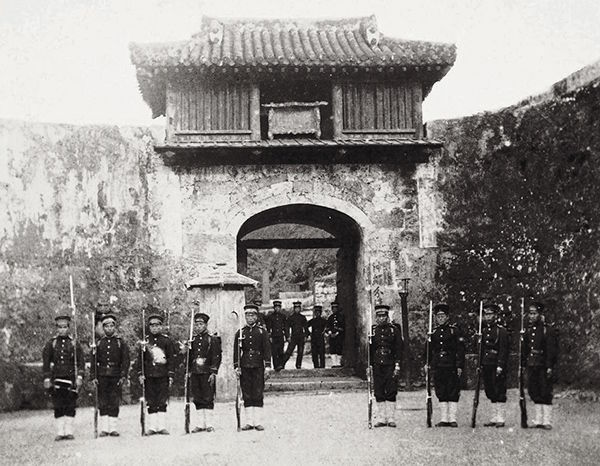
The kingdom's independence formally ended in 1879, when the Meiji government abolished it and created Okinawa Prefecture. The last king, Shō Tai, was moved to Tokyo and given a noble title.
What followed was a hard push toward assimilation. Standard Japanese became the language of school and government, and speaking the local tongue was actively discouraged, children caught using it were sometimes made to wear a "dialect tag" as a mark of shame. Over generations, the Ryukyuan languages faded from everyday use.
Today those languages, including Okinawan (Uchināguchi), are recognized as endangered, and linguists classify them as distinct languages within the same family as Japanese, not mere dialects, even though the official Japanese designation still calls them dialects. You'll mostly hear them now from older residents, in folk songs, and in traditional performance.
The American chapter (1945–1972 and after)
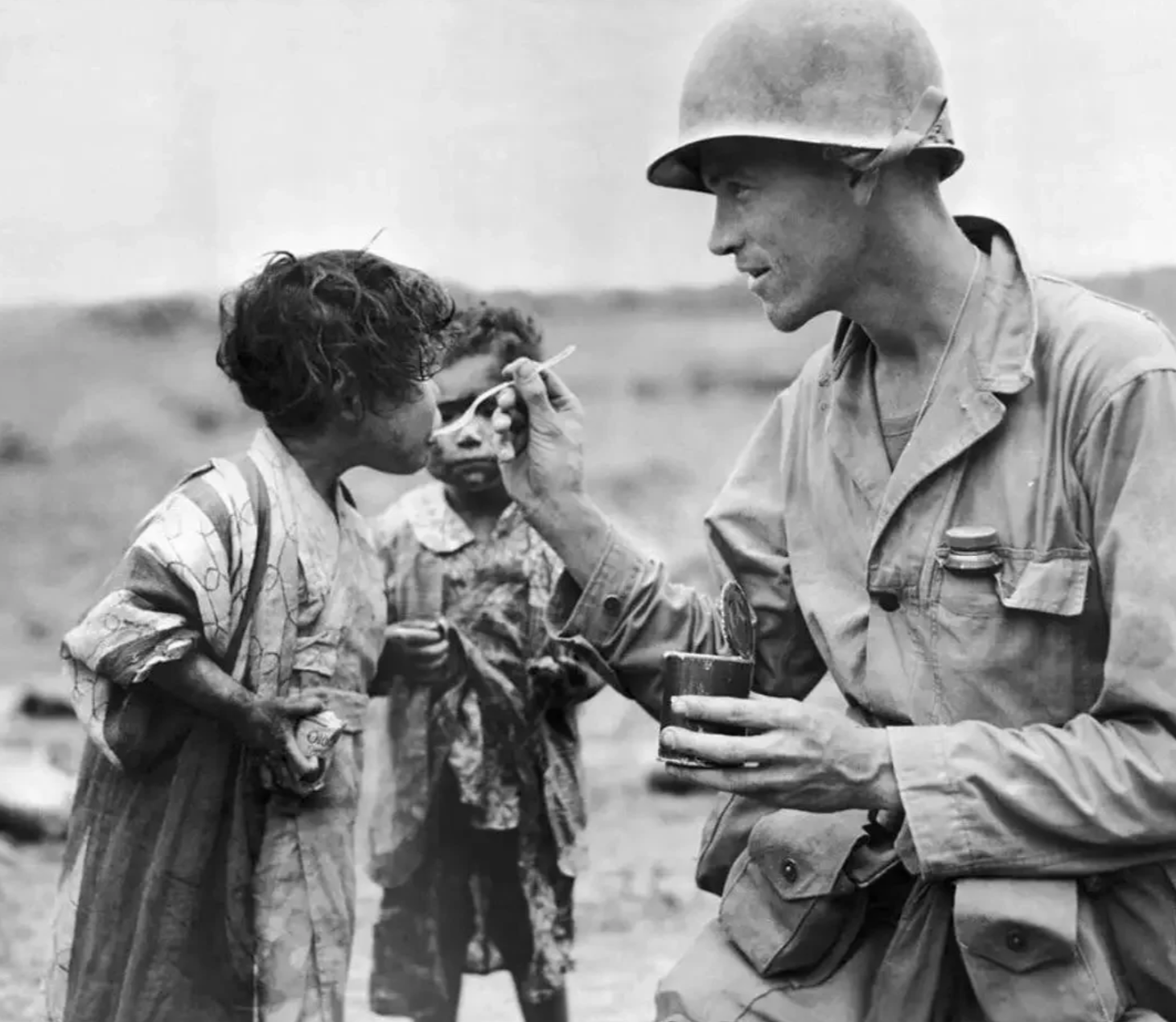
After the devastating Battle of Okinawa in 1945, the islands came under U.S. military and civil administration, and stayed there for twenty-seven years, roughly two decades longer than the postwar occupation of mainland Japan. Cars drove on the right, the dollar was the currency, and a passport was needed to travel to Tokyo.
Administrative control returned to Japan on May 15, 1972, in what's known locally as "reversion." But the U.S. bases remained under the security treaty between the two countries, and they remain today. That single fact explains most of the American texture visitors notice.
Champurū: the fusion in one word
Okinawans have a word for all this mixing: champurū. It's borrowed from the island's most famous stir-fry, gōyā chanpurū, and it's come to describe the culture itself, Ryukyuan, Japanese, and American elements tossed together into something new. Once you know the word, you'll see champurū everywhere: on the plate, in the music, in the signage, in the streets.
Do they speak English in Okinawa?
Here's the honest answer travelers actually need: standard Japanese is the working language of daily life, and English is tourist-manageable in the right places rather than widely spoken.
In Naha, at the airport, around the big resorts, and in the neighborhoods near the U.S. bases, you'll find bilingual signage, English menus, and staff who can handle the basics of a transaction. Tourism-facing workers often know enough English (and sometimes Chinese or Korean) to help you.
Head into the rural north, the Yanbaru region, or out to the smaller outer islands, and English drops off quickly. Signs are mostly in Japanese, and you may not find an English speaker in a village restaurant.
None of this should scare you off. A translation app, a bit of patience, and a few polite phrases will carry you a long way. Locals genuinely appreciate the effort, and a warm mensōrē ("welcome") back at you goes further than perfect grammar ever could. If it helps, the Okinawan for "thank you very much" is ippē nifēdēbiru, try it once and watch the reaction.
Where the international character concentrates
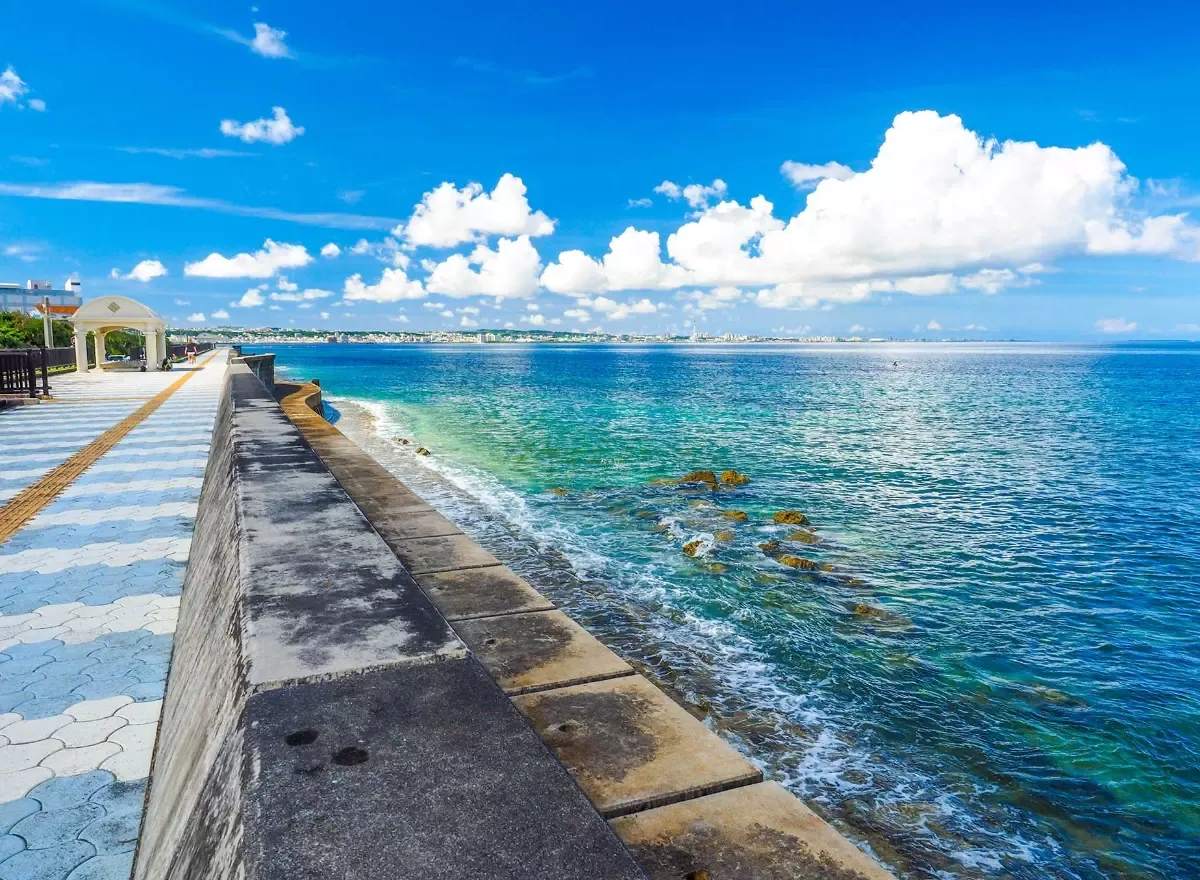
The cross-cultural feel isn't spread evenly across the island, it clusters in central Okinawa, mostly along the west coast between Naha and the base towns.
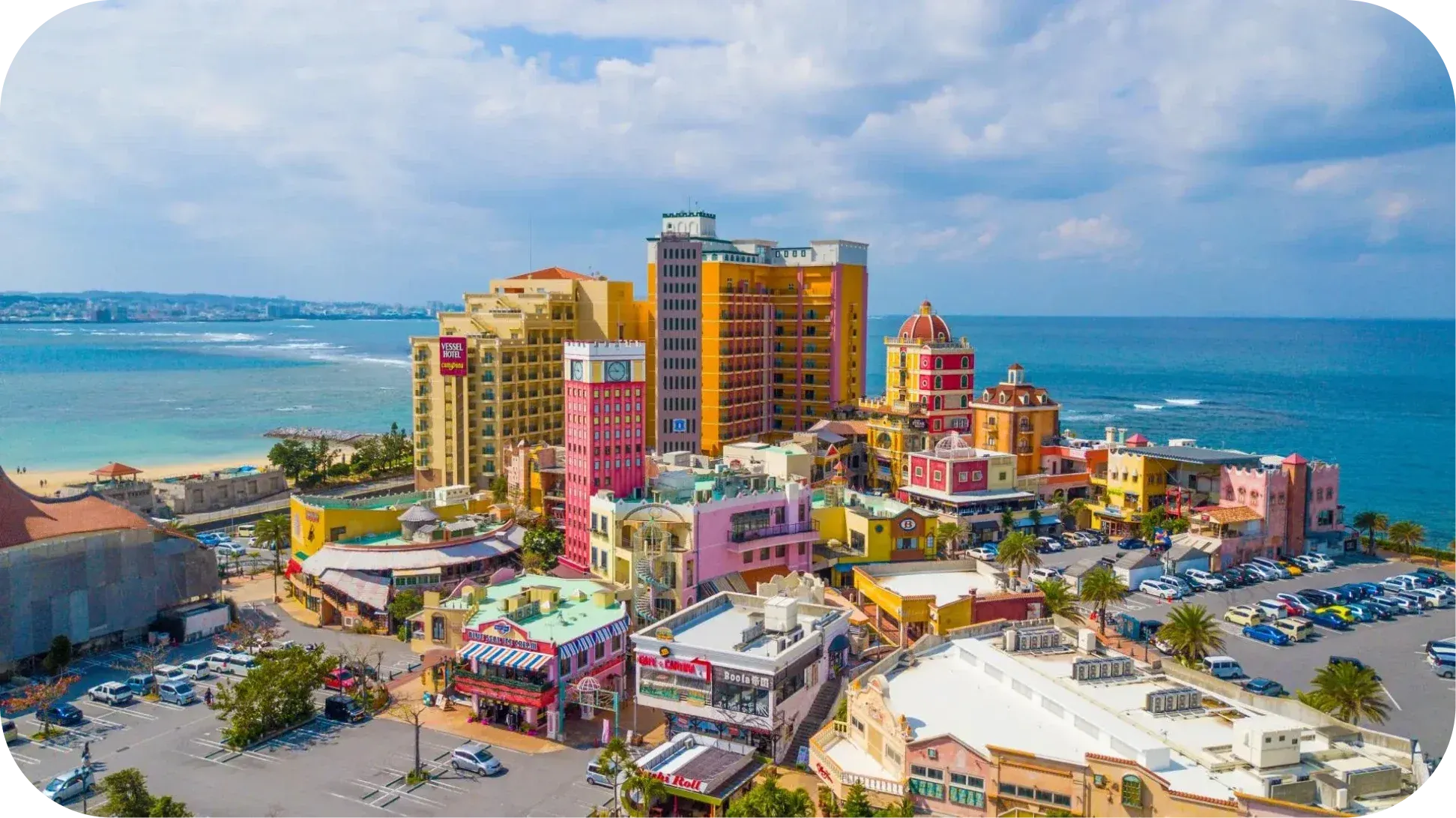
Chatan, with its American Village district, is the postcard version: a breezy, West Coast–styled zone of shops, cafés, and beachfront promenade built on land that was once a U.S. military airfield.
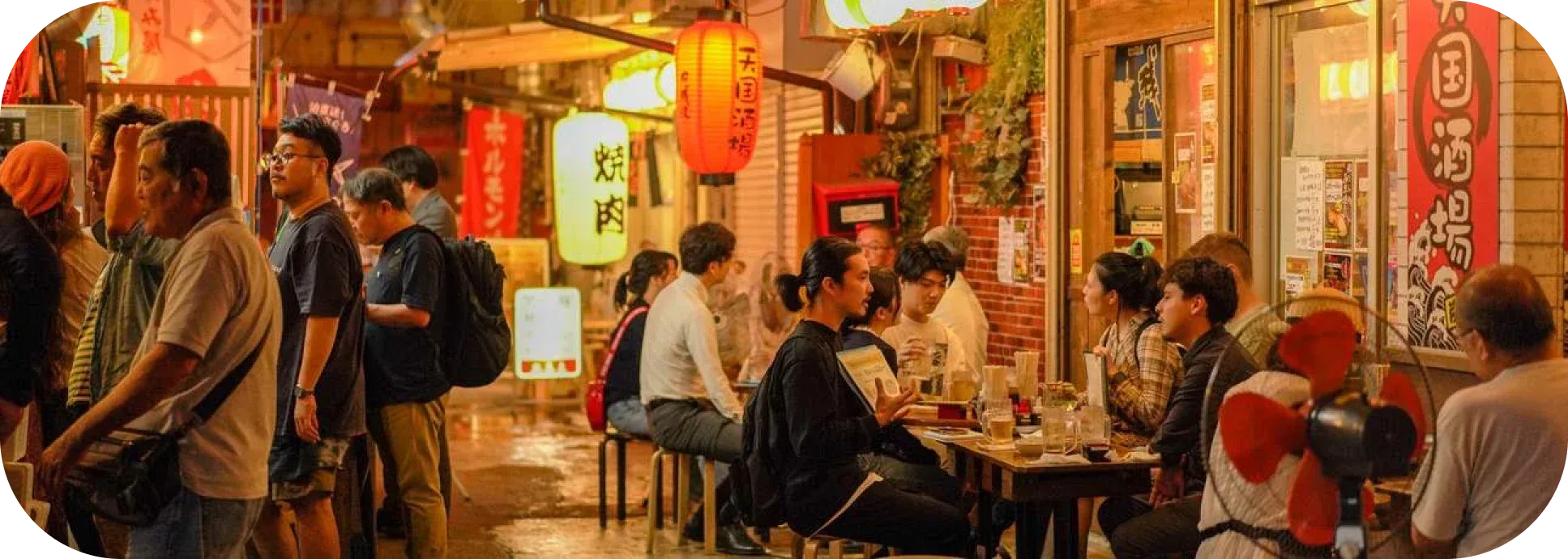
Naha's Kokusai-dōri, literally "International Street", is the other obvious hub, a lively boulevard of souvenir shops, izakaya, and street performers.
And Koza (part of Okinawa City), right beside Kadena Air Base, is the grittier, more authentic fusion town, a birthplace of Okinawan rock, lined with bars, live-music venues, and decades of Okinawan-American history along its Gate 2 Street.
Each of these deserves its own visit, and we've covered what to actually do in them elsewhere. For understanding how international Okinawa is, though, they're the living exhibits.
The American influence you'll actually notice
Some of the American imprint is subtle. Some of it is on a plate in front of you.
Taco rice is the perfect example. Invented in the town of Kin in 1984, reportedly by a local shop owner feeding hungry, cash-strapped Marines near Camp Hansen's gate, it's seasoned taco beef, cheese, lettuce, and tomato piled over white rice. It started as base-town comfort food and became a beloved Okinawan staple you'll now find island-wide.
Then there's A&W, the American burger-and-root-beer chain that opened its very first Japanese branch in Okinawa back in 1963. It never really spread to the mainland, so to this day it's an Okinawa thing, locals call it "Endā", famous for bottomless mugs of root beer.
You'll spot the influence in other places too: big American-style steakhouses, import shops stocked with U.S. groceries, and that unmistakable retro-Americana aesthetic around Chatan. The American Village's old landmark Ferris wheel came down in 2022, but the district's beachfront-boardwalk energy carries on without it.
For a deeper taste of how these layers meet on the plate, a small-group Naha evening food walk with Evertrail winds through the city's backstreets for classics like gōyā chanpurū, tebichi, mozuku, and umi budō, champurū food culture explained bite by bite, in English.
It's worth naming the harder part honestly, too. The American presence exists because of the bases, and the bases are a genuinely sensitive subject here. Okinawa makes up less than one percent of Japan's land area but hosts the large majority, commonly cited as around 70 percent, of the country's U.S. military facilities.
For many locals, the bases mean jobs and income in a prefecture that has long been among Japan's lowest-earning. For many others, they mean noise, land taken by force after the war, environmental strain, and painful incidents. Surveys around the 50th anniversary of reversion, in 2022, found most residents favored either a stronger local government or the status quo, with only a small minority supporting outright independence. As a visitor, it's enough to know this is a live, complicated issue — not just colorful backdrop for a photo.
Okinawa's international tourism today
Okinawa is used to international visitors, and increasingly so.
The prefecture welcomed roughly 9.66 million travelers in 2024, up sharply on the year before and close to pre-pandemic levels — of which about 2.12 million were international arrivals, more than double the previous year. (These figures move fast, so treat them as a snapshot of where things stood heading into 2026 rather than a fixed number.)
The island's tourism infrastructure reflects that international familiarity, especially in the main hubs. And it's well positioned for combination trips: Taipei is only about ninety minutes away by air, making a Taiwan-plus-Okinawa itinerary genuinely easy, with several airlines running the short hop.
The takeaway for you: you won't be a novelty here. Okinawa knows how to host international guests, and the systems that matter to travelers are largely in place.
Is Okinawa foreigner-friendly for a trip?
By Japanese standards, yes, with the usual caveat that "friendly" varies by area. Here's the practical rundown, all of which is worth confirming close to your travel dates, since services change.
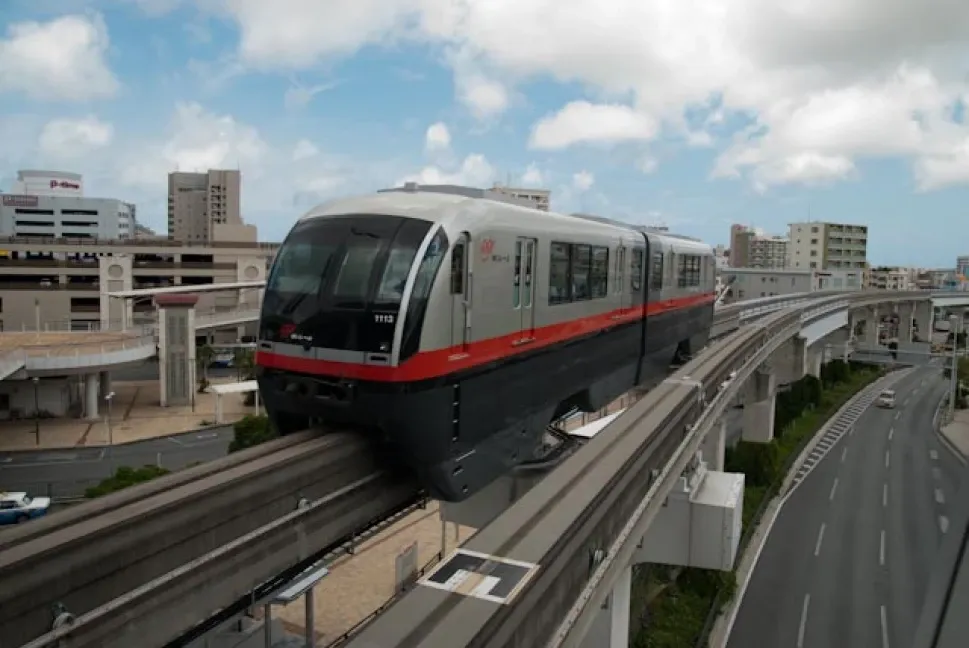
Getting around Naha. The Yui Rail monorail is the prefecture's only train line, about 17 kilometers and 19 stations running from Naha Airport across the city. It's bilingual, easy to use, and accepts the local OKICA card as well as the major Japanese IC cards (like Suica and PASMO) and contactless credit cards. One catch worth knowing: you can use a pre-loaded mainland IC card in Okinawa, but you generally can't buy or top one up here. Beyond the Naha corridor, there's no rail, so most travelers rent a car.
Paying for things. Cards and IC cards work reliably at hotels, car-rental desks, chain restaurants, department stores, and convenience stores in Naha and the resort zones. But cash still rules at small local eateries, public markets, some parking, and much of the outer islands. Carry both. Foreign cards work at 7-Eleven and Japan Post ATMs, which have English menus.
Medical care in English. Several hospitals advertise English support, and there's an established English-friendly clinic history on the island. In practice, "English-speaking" often means one doctor with some English, so for anything urgent the smart first move is the prefecture's multilingual medical hotline for injured or ill travelers, which can help direct you and arrange interpretation.
Dietary needs. Okinawan cooking leans heavily on pork and lard, so halal and vegetarian travelers should plan ahead. A small but growing set of Muslim-friendly and vegetarian restaurants exists, concentrated in Naha, with a Muslim-friendly option and a prayer room at the airport , but availability is limited compared with Tokyo or Osaka, so confirm directly with venues before you go.
A note on the bases and safety. The military installations themselves are active bases, not attractions, you can't just wander in, and approaching a gate uninvited is a bad idea. The exception is the occasional "open base" friendship festival, when the public is welcomed in with ID for food, music, and displays; dates shift year to year, so check official base announcements if you want to catch one. As for safety, Okinawa is very low-crime by international standards. The base-adjacent nightlife strips call for normal night-out common sense, and that's about it.
If the language gap is your main worry, this is exactly where a guided day helps. Every experience Evertrail runs includes a full-time English-speaking guide from start to finish, which turns transport logistics, restaurant ordering, and cultural context from friction into part of the fun.
How Okinawa compares to mainland Japan for international visitors
Compared with Tokyo, Kyoto, or Osaka, Okinawa tends to feel a little easier to navigate as an English speaker, more resort-oriented, and culturally distinct in a way that surprises first-timers who expected "Japan, but tropical."
That's a short answer to a big question, and it deserves its own deep dive. But for the purposes of this one: if you want Japan with a gentler on-ramp and a different cultural flavor, Okinawa delivers.
Who Okinawa is (and isn't) ideal for
Okinawa is a strong pick if you're a first-time visitor to Japan who wants a beach-and-culture mix with a softer language barrier, if you're traveling with family, or if you're an English-only traveler nervous about getting around. The main hubs are welcoming, the logistics are manageable, and the champurū culture gives you something you can't get anywhere else in the country.
It's a slightly different fit if your dream is deep, traditional, "untouched" Japan. You'll still find that here, but it lives in the quiet Yanbaru north and the remote outer islands, not in the busy central corridor. Point yourself there, and Okinawa rewards you with a slower, older world.

Frequently asked questions
Do they speak English in Okinawa?
Not widely, but enough for travelers in the main tourist areas. English is more common in Naha, at the airport, around resorts, and near the U.S. bases, and within the tourism industry generally. In the rural north and on the outer islands, English is limited and Japanese dominates. A translation app is recommended.
Why does Okinawa feel so American?
Okinawa was under U.S. administration from 1945 to 1972 and still hosts a large U.S. military presence. That history produced visible American influences, food like taco rice and A&W root beer, English signage in base towns, and districts such as American Village and Koza's Gate 2 Street.
Is Okinawa part of Japan?
Yes. Okinawa is Japan's southernmost prefecture. It was the independent Ryūkyū Kingdom until 1879, was under U.S. administration from 1945 to 1972, and has been fully part of Japan since reversion on May 15, 1972.
Is Okinawa safe for tourists with the U.S. military bases there?
Yes. The bases are fenced, active installations kept separate from tourist areas, and are not a barrier to travel. Okinawa is low-crime by international standards. Standard nightlife precautions apply in base-adjacent entertainment districts.
Is Okinawa a good destination for first-time visitors to Japan?
For many travelers, yes. It offers a mix of beaches, culture, and a comparatively gentle language barrier in its main areas, along with distinctive food and history. Travelers seeking traditional temple-and-city Japan may prefer to pair it with a mainland stop.
What is champurū culture?
Champurū means "mixed." It describes Okinawa's blend of Ryukyuan, Japanese, and American cultural influences, visible in its food, music, and daily life. The name comes from gōyā chanpurū, a bitter-melon stir-fry.
What language do they speak in Okinawa?
Standard Japanese is the everyday language. The indigenous Ryukyuan languages, including Okinawan (Uchināguchi), are now endangered and mostly spoken by older residents and used in traditional music and performance.
Can tourists visit the U.S. military bases?
Generally no. The bases are not open for casual visits. The main exception is scheduled open-base festivals, when the public can enter with valid ID. Dates vary each year, so check official base announcements before planning around one.
The bottom line
So, how international is Okinawa? More than most of Japan, and in a way that's all its own.
It isn't international because everyone speaks English or because it's been made to feel Western. It's international because its history stacked three cultures on the same subtropical islands and let them blend into something you won't find on the mainland. You taste it in a plate of taco rice, hear it on Gate 2 Street, and read it on a street named for the wider world.
For a first-time visitor, that combination is a gift: a destination that's easier to navigate than you might fear, yet more distinctive than you'd expect. Come for the beaches, and you'll leave talking about the layers.
Evertrail Tours · July 20, 2026