Here is the first thing worth knowing about transportation in Okinawa, and it surprises almost everyone who arrives expecting a Tokyo-style rail map: there is no train. Not really. The prefecture has a single monorail line that runs about 17 kilometres through the capital, and beyond that, every journey happens on a road, on the water, or in the air.
That sounds like a problem. It isn't, it just means you plan differently here than you would anywhere else in Japan.
Okinawa is not one island. It's an archipelago that stretches more than 1,000 kilometres of ocean, from the main island of Okinawa down to Ishigaki and Yonaguni near Taiwan. So "how do I get around Okinawa?" is really three separate questions stacked on top of each other: how you reach your island, how you move around the main island once you land, and how you get about on a small outer island where the rules change again.
We live and guide here, and this is the transportation guide we wish every visitor had before planning a trip to Okinawa. It covers the main ways to get around honestly — where each mode shines, where it fails, and roughly what it costs, so you can match the right means of transportation to the right stretch of your trip.
Key takeaways
- Okinawa has no railway. The only rail transport in the prefecture is the Yui Rail monorail, a single line of 19 stations serving Naha and Urasoe.
- Outside Naha and the resort coast up to Onna, a rental car is the practical default. Bus frequency in rural and northern Okinawa can drop to a handful of services a day.
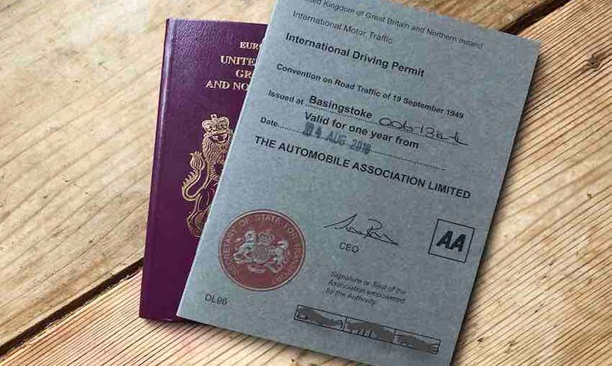
- Foreign drivers need an International Driving Permit in the 1949 Geneva Convention format (the booklet, not a card). Traffic drives on the left, and the minimum driving age is 18.
- Ferries reach the Kerama, Kume and Yaeyama islands. Flights are the practical route to Miyako and Ishigaki. Ferries cancel on weather far more readily than flights do.
- Scooter rental is common on the small islands, but the licence rules shifted in 2025 and are genuinely murky for foreign visitors, carry an IDP with the motorcycle stamp and confirm with the shop.
- Taketomi and much of the Kerama group discourage or ban visitor rental cars. Bicycles and scooters are the intended way to explore Okinawa.
How transport in Okinawa actually works
Start with the mental model, because it saves a lot of confusion later.
There is no rail network beyond the Yui Rail monorail in Naha. Everything else on the main island moves on roads, and two roads carry most of the load: Route 58, the west-coast artery running north from Naha through the resort towns, and the Okinawa Expressway, which shortcuts the same journey inland from Naha up to Nago.
Off the main island, the road simply ends at the water. From there you're choosing between a boat and a plane. Short hops to nearby islands are ferries. Long hops to the far southern islands are flights. That's the whole system in a sentence.
Once you internalise that, road, then boat or plane, the rest of this guide is just detail.
Which transport should you use? A quick decision guide
Most of the anxiety around getting around Okinawa comes from overthinking it. Here's the short version, by trip type.
If you're staying in Naha for a night or two and sticking to the city, markets, Kokusai-dōri, Shuri, you don't need a car. The Yui Rail is the best way to get around Naha city, and your own two feet cover almost everything, so parking in Naha city is more hassle than it's worth.
If you're basing yourself in Naha but want to reach Chatan and American Village, you can still manage car-free using the airport limousine bus and express buses, though it takes patience.
The moment your plans include anywhere north of Onna Village, a beach, a sunset at Cape Manzamo, or the aquarium, a rental car earns its keep. Buses reach these places, but slowly and infrequently, and the last one back leaves earlier than you'd like.
For Yanbaru, remote trailheads, or a night visit to somewhere like Kouri Island, a car is effectively required, rural buses thin out sharply after early evening.
For the Kerama Islands or Taketomi, the answer is a ferry to get there and a bicycle or scooter to get around. Cars are either unnecessary or not allowed.
And for Miyako or Ishigaki, flights are available to reach the island and a rental car once you're on it, book the car early, because good vehicles sell out in peak season.
If you'd like the full car-free playbook, bus passes, routing to the aquarium, luggage tricks, we've written a separate deep-dive on getting around Okinawa without a car. This guide stays focused on the whole picture.
Driving in Okinawa: rental cars and the expressway
For most visitors exploring beyond Naha, a rental car is the single best decision they make. A car gives you the freedom to turn a rigid bus timetable into an open map.
The paperwork matters, so get it right before you fly. Foreign drivers generally need an International Driving Permit issued under the 1949 Geneva Convention — and specifically the booklet version. Card-style and app-based "permits" are not accepted, and IDPs issued under other conventions won't work either.
A handful of countries are exempt from the IDP entirely, including Switzerland, Germany, France, Belgium, Monaco, Slovenia and Taiwan. Drivers from those places instead bring their home licence plus an official Japanese translation from the Japan Automobile Federation (JAF). An IDP is valid for up to a year, and you'll want an entry stamp in your passport, so use a staffed immigration lane on arrival rather than the automated gates.
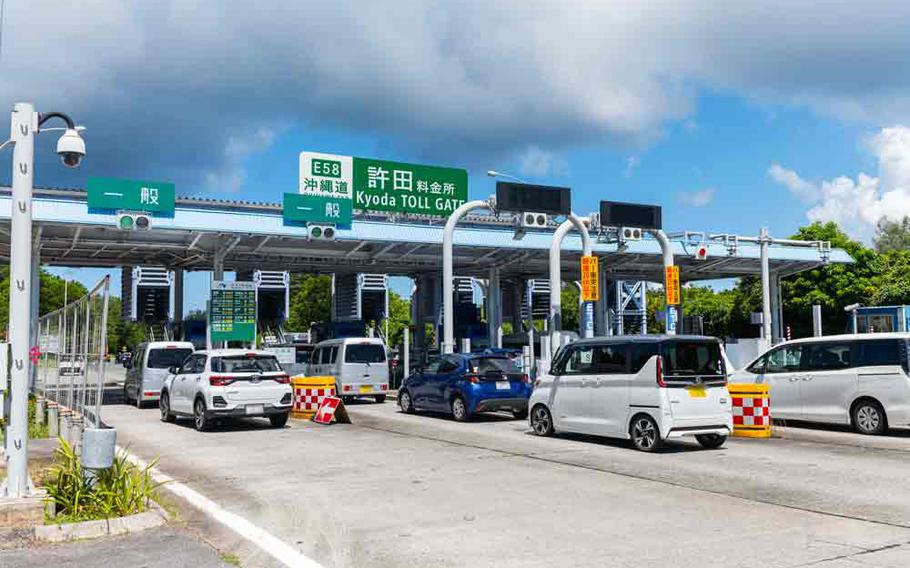
On the road itself, Okinawa is easy. Traffic drives on the left, local drivers are patient, and the scenery does half the work. The Okinawa Expressway runs from Naha up to the Kyoda interchange near Nago, at roughly 57 kilometres, it's the shortest expressway in Japan. The end-to-end toll for an ordinary car is in the region of ¥1,600 as of early 2026, though tolls change, so confirm the current figure before you set off.
Two practical notes. First, toll booths take cash or Japan-issued cards; if you want the smoother ETC electronic lane, rent an ETC card from your rental company when you pick up the car. Second, fuel in Okinawa is not the bargain people expect, budget somewhere around ¥170 to ¥175 per litre. Parking is generally free outside the cities and paid by the half-hour in central Naha.
There's a great deal more to say about renting here — insurance, car rental companies, the quirks of Naha traffic, and we'll cover it in a dedicated rental-car guide. For this overview, the headline is simple: get the right permit, drive on the left, and the island opens up.
Scooters and mopeds: the option nobody explains
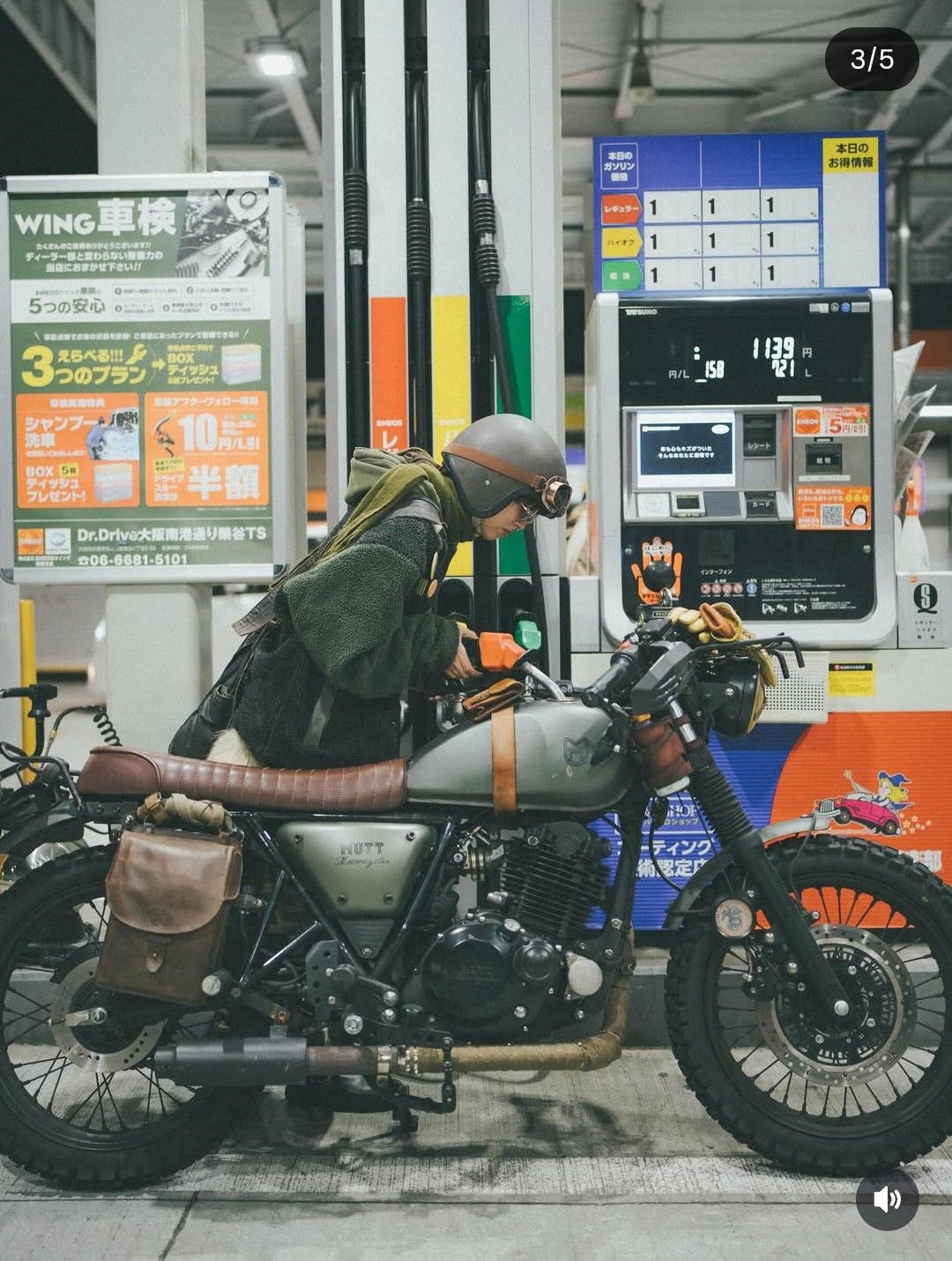
Here's the transport question we get asked most and see answered worst online: can I just rent a scooter?
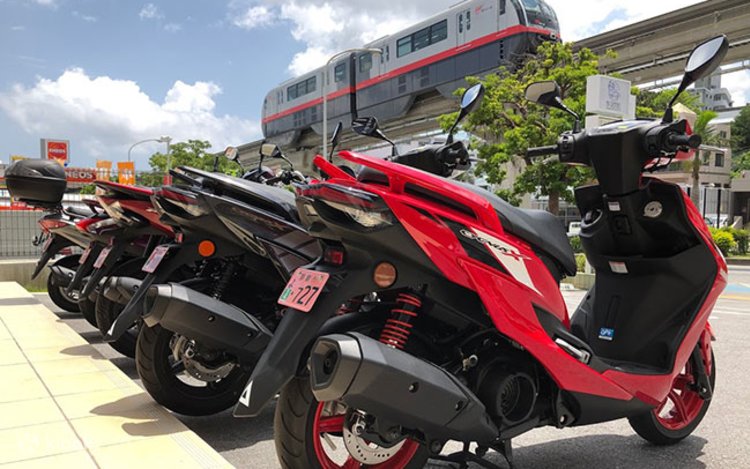
On the small islands, a scooter is often the perfect tool, nimble, cheap, and exactly the right speed for a place you're meant to take slowly. But the licensing side is genuinely confusing right now, and we'd rather be honest than tidy about it.
Japan changed its moped rules in April 2025. The category the Japanese call gentsuki, the entry-level moped tier, was redefined to include machines up to 125cc, provided their power output stays low. That change was driven by new emissions standards that made the old 50cc engines uneconomical to build. The upshot is that the legal landscape shifted recently, and a lot of English-language advice online still describes the old system.
For a foreign visitor, the safest reading is this. Carry a 1949 Geneva International Driving Permit with the motorcycle ("A") stamp on it. Official sources don't fully agree on whether even a sub-50cc moped strictly requires that stamp, and no clear guidance yet covers foreign permit-holders and the new larger gentsuki category. The motorcycle stamp satisfies every interpretation we've seen, so get it before you travel and confirm the details with the rental shop on the day. If a shop is vague or waves you off without checking your permit, treat that as a warning sign, not a green light.
A few practical realities regardless of the paperwork. Helmets are mandatory. The minimum age to ride is 16. The smallest mopeds are single-rider only by law, so don't plan to carry a passenger on a 50cc. And fuel on the tiniest islands can be scarce, so top up when you can.
Where does a scooter actually make sense? On Zamami, Tokashiki, Kume, Miyako's quieter back roads, places where distances are short and traffic is light. Where doesn't it? On Route 58, anywhere in Naha, and in rain or wind. A scooter is also the highest-injury mode on this whole list, so ride it where it belongs and not as a substitute for a car on busy main roads.
One island removes the question entirely: Taketomi allows no rental scooters or cars at all. There, it's bicycles or nothing motorised.
Buses, the Yui Rail, and taxis
Public transportation in Okinawa is better than its reputation, as long as you know its shape.
The Yui Rail, officially the Okinawa Urban Monorail, is the whole of the prefecture's rail system. The Yui Rail runs a single monorail line of 19 stations from Naha Airport, through downtown Naha and Shuri, out to Tedako-Uranishi in Urasoe. End to end takes around 37 minutes. Single fares run roughly ¥230 to ¥390, and there are 1-day and 2-day passes at about ¥800 and ¥1,400. To sightsee around Naha, it's your best friend and the most convenient way to travel.
Buses cover the rest of Okinawa's main island through four companies, including Ryukyu Bus Kotsu and Okinawa Bus, most routed via the Naha Bus Terminal downtown. You don't need to memorise them, the bus routes show up in Google Maps, which is by far the easiest way to plan a local bus journey here. Fares within central Naha are a flat rate; longer routes charge by distance.
One trap catches a lot of travellers: the national IC cards like Suica, ICOCA and PASMO work on the Yui Rail monorail system, but they generally do not work on Okinawa's route buses. On the buses you'll want the local OKICA card, cash, or a credit card on the routes that accept one. Keep coins and small notes handy.
Taxis in Okinawa are plentiful in Naha and the towns, with a flagfall around ¥550. They're perfect for short hops and late nights. Over long distances they get expensive fast — a single taxi run from Naha up to the resort coast can climb well past ¥6,000, which is exactly the point where a rental car becomes the smarter call. Ride-hailing apps operate in the urban areas and are reliable.
If public transport is your main plan, our car-free guide breaks down every pass and the best bus routing in detail.
Ferries: reaching the Kerama, Kume and Yaeyama islands
Some of the best days in Okinawa travel happen on the outer islands you can only reach by boat, and a network of ferries is how you get there.
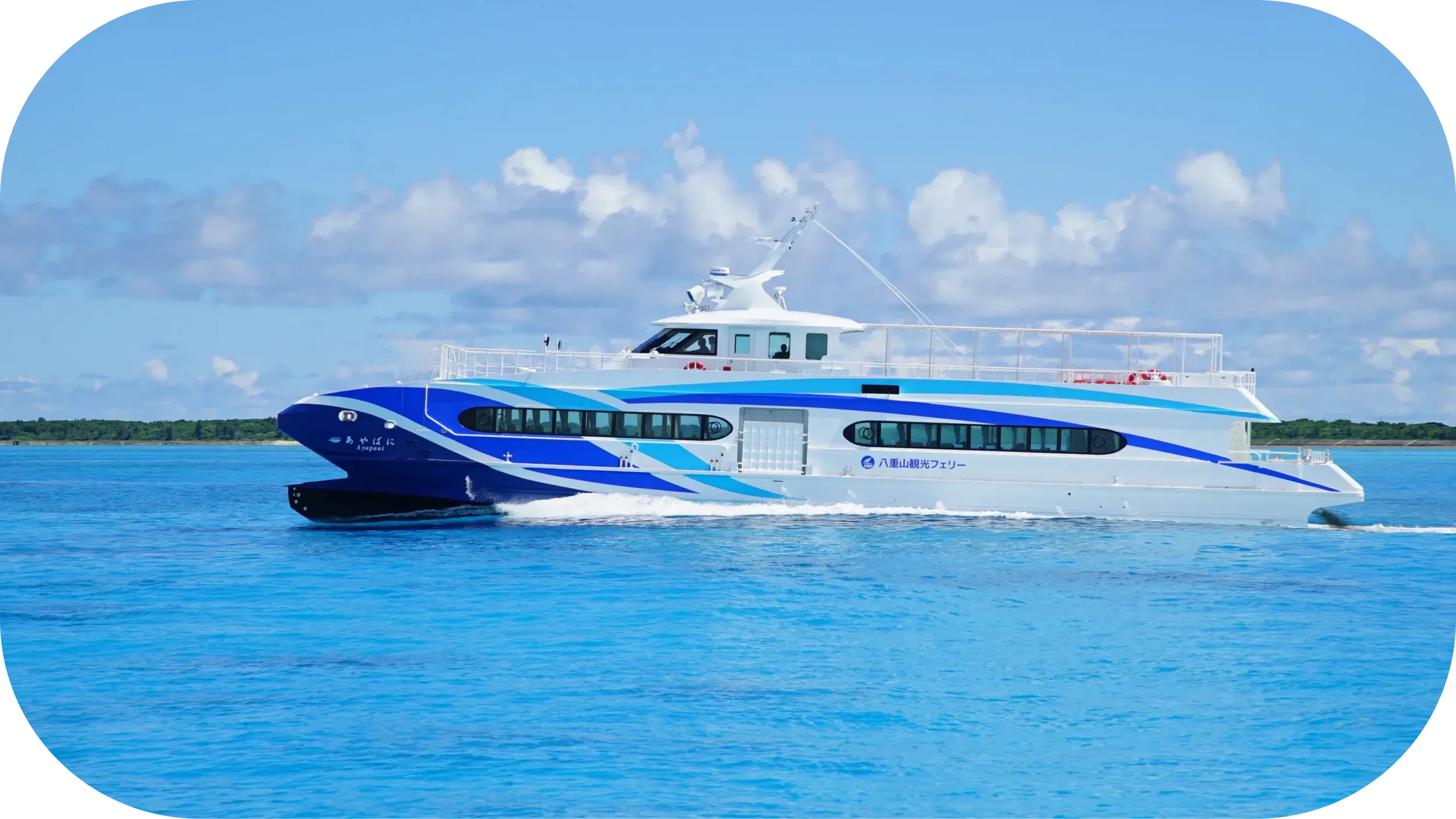
First, don't confuse your ferry terminals. In Naha, the ferries to the nearby islands leave from Tomari Port, often called Tomarin, that's your gateway to the Kerama Islands, Kume and a few smaller isles. The separate main Naha Port handles the long-haul ferries to mainland Japan, which is not what most visitors want.
The Kerama Islands are the classic day trip or short escape from Naha. To Tokashiki, the fast boat takes around 35 minutes and the slower ferry about 70. To Zamami and Aka, reckon on roughly 50 to 70 minutes by fast boat. Fares are in the low thousands of yen each way, and there's a small environmental tax collected when you board. Sailings run a few times a day, more in summer. Booking ahead for the fast boats in peak season is wise, Zamami Island's service has English online booking, while Tokashiki Island leans more on phone reservations, which is worth knowing in advance.
Down in the Yaeyama Islands, the hub is Ishigaki Island, and from its ferry terminal you can reach Taketomi in as little as 10 to 15 minutes, with regular boats out to Iriomote, Kohama, Kuroshima, Hateruma and more.
Here's a detail that trips people up: two ferry companies serve Yaeyama, and the old combined ticket that let you ride either one was abolished back in October 2020. Nothing has replaced it. Each company's ticket is only valid on that company's boats, so match your ticket to the boat you're boarding, or you'll pay twice.
Above all, treat the ocean as the boss of your schedule. Ferries cancel on rough weather, and the fast boats cancel first. The Uehara route on Iriomote and the run out to Hateruma have the highest cancellation rates of all, Hateruma sits across open ocean with only one operator and a few sailings a day, so never wedge it into a tight itinerary. Check the operator's website or social feed on the morning of travel, and keep a spare half-day in your plans.
Flights: getting to Miyako, Ishigaki, Yonaguni and beyond
For the far-flung southern islands, flying isn't a luxury, it's the only sensible option, and frequent domestic flights make it easy.
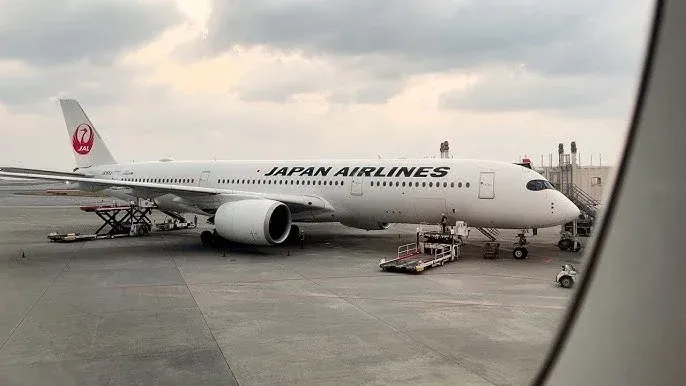
There is no passenger ferry from the main island to Miyako or Ishigaki. Both are reached only by flight, and the flights are short: Naha to Ishigaki is about an hour, Naha to Miyako a little under that, and Naha to Kume around half an hour. The little regional carriers also run direct flights connecting Ishigaki onward to Yonaguni, Japan's westernmost inhabited island, in about 30 minutes.
Naha Airport is the hub for all of it. If you're island-hopping across the prefecture, you'll likely route through Naha more than once, so build a little buffer into any tight connection, and remember that flight schedules shift, so confirm on the airline's own channels close to departure.
Getting around once you're on an outer island
Reaching an island is only half the puzzle. Each one has its own transportation options and its own way of getting about.
Miyako practically requires a rental car, the beaches are spread out, buses are limited, and driving between the bridges is part of the pleasure. Book the car well ahead.
Ishigaki is more flexible. It has an extensive bus network with day passes, plus rental cars, scooters and e-bikes. A car is still ideal for reaching the quieter corners.
Iriomote is half jungle and river, and some of it is only reachable by boat. The island also introduced a certified-guide and entry-permit system in March 2025 for its most sensitive natural areas, including Pinaisara Falls. Importantly, that system controls access to those specific spots and the guiding around them, it doesn't restrict getting onto the island or driving its main road. If a waterfall trek is on your list, you'll be joining a certified guide, so plan for that.
Taketomi is the gentle one: no rental cars, no scooters, just bicycles, the famous water-buffalo cart, a unique way to get about, a small shuttle, and your own feet. It's small enough that this is a feature, not a limitation.
Kume, Zamami and Tokashiki all offer some mix of small buses, scooters and bicycles, with rental cars available on Kume in particular. Hateruma, Japan's southernmost inhabited island and a genuinely remote island, keeps things minimal, bikes and the odd scooter, and the real challenge there is simply getting the ferry to run.
Bicycles, walking and slower ways around
Not every journey needs an engine. Naha itself is genuinely walkable around its central districts, and the buses and the monorail fill the gaps.
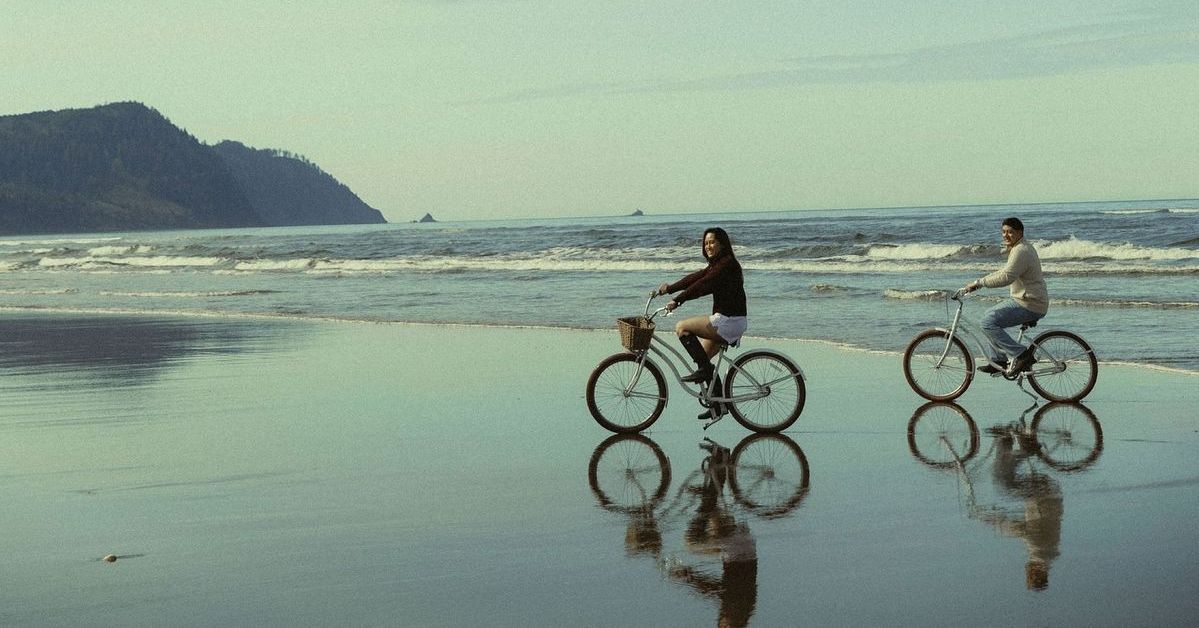
On the small islands, cycling comes into its own. Taketomi Island and Kume are made for it — flat enough, small enough, and quiet enough that a bicycle is often the nicest way to move around the island. E-bikes are increasingly available if you'd rather not sweat up the hills. For a day on a compact island, two wheels and no timetable is hard to beat.
What transport actually costs
A rough sense of the numbers helps you plan, though every figure here moves with season and fuel prices, so treat them as anchors rather than promises.
A Yui Rail day pass is around ¥800. A taxi starts near ¥550 but the fare adds up quickly over distance. A compact rental car runs somewhere around ¥7,500 a day nationally and climbs in Okinawa's peak weeks, Golden Week, high summer and New Year. Kerama ferry fares sit in the low thousands of yen each way. A one-way flight from Naha to Ishigaki can range from roughly ¥10,000 to ¥25,000 depending on how far ahead you book and which carrier you choose.
For a full Okinawa trip budget, accommodation, food and activities alongside transport, see our realistic Okinawa cost breakdown.
Mistakes we watch visitors make
After years of guiding here, the same avoidable slip-ups come up again and again.
The most common is underestimating Route 58 in traffic. A drive that looks like an hour on the map can balloon in rush hour, especially through central Okinawa.
The second is assuming a last bus exists. In rural and northern areas, bus services thin out early in the evening, and being stranded at a rural bus stop because you missed the final departure is a real risk, plan your return, not just your arrival.
The third is renting a car for a Naha-only trip. In the city, parking is scarce and the monorail reaches nearly everything, so the car just sits there costing money.
The fourth is trusting a ferry to run in typhoon season. Boats cancel, sometimes at short notice, and the far routes cancel most. Keep a flexible half-day for the islands you most want to see, and visit them early in your trip rather than saving them for the last day.
And the fifth is the scooter licence gamble, turning up expecting to ride on a licence that doesn't cover it. Sort the right permit before you fly.
Frequently asked questions
Does Okinawa have a train?
No. Okinawa has no conventional railway. The only rail transport in the prefecture is the Yui Rail monorail, a single line running through Naha and into neighbouring Urasoe. Everywhere else, you travel by road, ferry or plane.
Do you need a car in Okinawa?
It depends on where you're going. For a Naha-only city trip, you don't, the monorail and walking are enough. For anywhere north of Onna, the beaches, the aquarium, or the quieter corners of the main island, a rental car is the practical choice because buses are infrequent outside the city.
Can you get around Okinawa without a car?
Yes, you can explore plenty without renting a car, especially if you stay in and around Naha. The Yui Rail, city buses, express and limousine buses, taxis and ferries can cover a full trip. It takes more planning and patience than driving, and our dedicated car-free guide walks through the passes and routes in detail.
Do I need an International Driving Permit to drive in Okinawa?
Most foreign visitors do, specifically a booklet-style IDP issued under the 1949 Geneva Convention. A few countries, including Switzerland, Germany, France, Belgium, Monaco, Slovenia and Taiwan, are exempt and instead bring their home licence with an official Japanese translation.
Can tourists rent a scooter in Okinawa?
Often yes, particularly on the smaller islands, but the licence rules changed in 2025 and remain unclear for foreign visitors. The safest approach is to carry a 1949 Geneva IDP that includes the motorcycle stamp, and to confirm the requirements directly with the rental operator before riding.
How do you get from Okinawa to Ishigaki or Miyako? By plane. There is no passenger ferry from the main island to either. Flights from Naha take roughly an hour to Ishigaki and a little less to Miyako, operated by the main Japanese carriers and their regional subsidiaries.
How do you get to the Kerama Islands? By ferry from Tomari Port in Naha. Fast boats reach Tokashiki in around 35 minutes and Zamami in roughly 50 to 70 minutes, with slower ferries also available. Sailings depend on the weather, so check the operator's status on the morning of travel and book fast boats ahead in summer.
Are Suica and PASMO accepted on Okinawa transport?
On the Yui Rail monorail, yes, national IC cards work for travel, though you can't top them up at monorail stations. On the main-island route buses, they generally are not accepted, so carry the local OKICA card or cash.
Plan around transport, not despite it
When you visit Okinawa, the trick to getting around is to stop thinking of transport as an obstacle between you and the good parts. Here, the ferry ride to a quiet island, the drive up the coast on Route 58, the rattle of the monorail over the rooftops of Naha, these are part of the trip, not interruptions to it.
Match the mode to the moment. Take the monorail in the city, rent a car for the north, catch a ferry to the Keramas, fly to the far south, and coast around a small island on a bicycle. Sort your driving permit before you fly, keep a buffer day for the weather, and let the ocean set the pace when it wants to.
Do that, and Okinawa's scattered, sea-crossed geography stops being a logistical headache and turns into exactly what makes the place worth the journey.
Fares, schedules, tolls and rules mentioned here are accurate to the best of our knowledge as of early 2026 and can change — always confirm directly with operators and rental companies before you travel.
Evertrail Tours · July 19, 2026