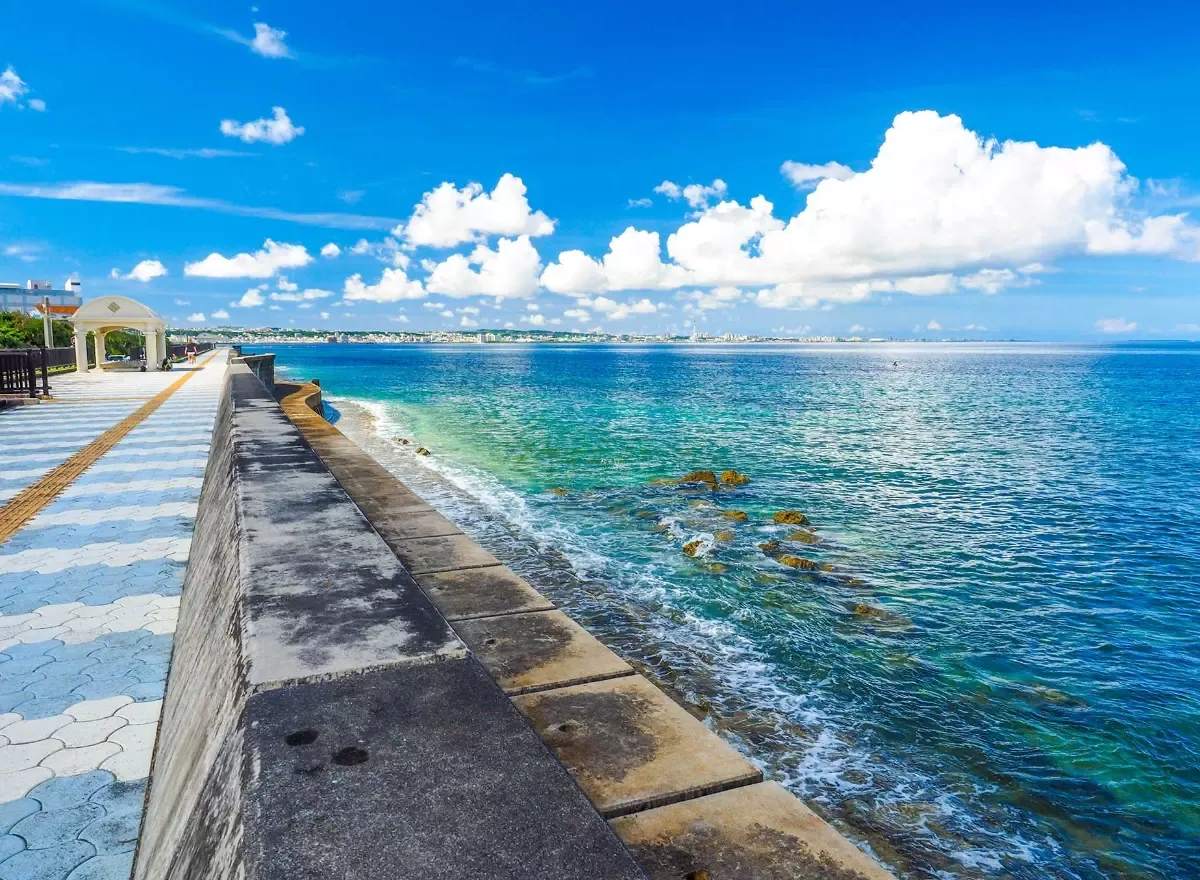
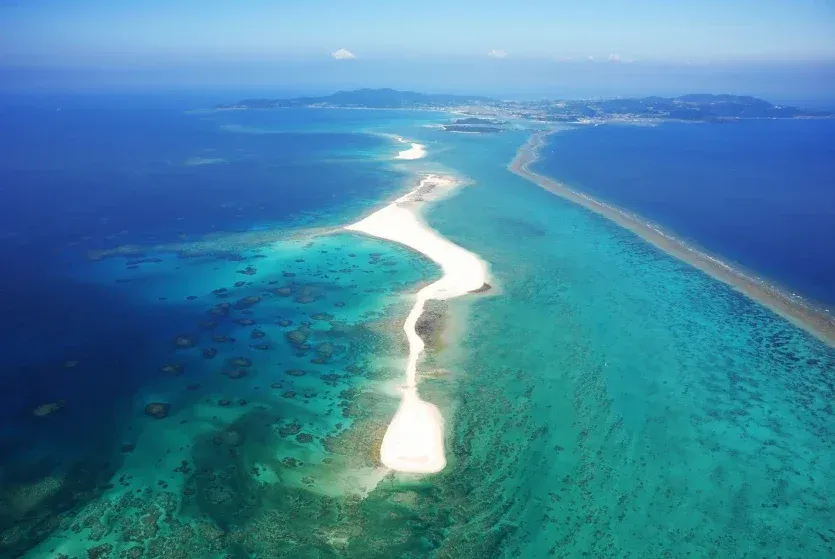
Most people come to Okinawa for the beaches. Turquoise water, white sand, a mai tai by four o'clock, and there's nothing wrong with that. But drive an hour north of the resort strip, or hop a ferry to the outer islands, and you land in one of the most remarkable pockets of wildlife in Okinawa anywhere in Japan.
This is a place where a flightless bird patrols the forest floor, where a wild cat found nowhere else on Earth still slips through the mangroves at dusk, and where the woods glow with fireflies for a few short weeks each spring. It's also a place with a couple of animals worth respecting, a venomous snake in the hills and a jellyfish in the summer sea.
Here's what lives here, why so much of it exists only in these islands, where and when you can responsibly see it, and what to watch out for.
Why Okinawa's wildlife is unlike anywhere else in Japan
The secret is geography. Okinawa sits in the middle of the Ryūkyū archipelago, a chain of islands strung between Kyushu and Taiwan. Millions of years ago these islands were connected to the Asian mainland by land bridges. Then the sea rose, the bridges vanished, and the animals stranded here were left to evolve on their own.
The result is an extraordinary number of endemic species, plants and animals found in Okinawa and nowhere else, endemic to the Ryukyu Islands alone. Some are living relics, ancient lineages that died out on the mainland but survived here in isolation. It's the reason the islands are sometimes nicknamed the "Galápagos of the East."
That biodiversity earned formal recognition in 2021, when UNESCO inscribed four areas, the northern part of Okinawa Island, plus Iriomote, Amami-Ōshima and Tokunoshima, as a World Natural Heritage Site, specifically for the richness and rarity of their wildlife.
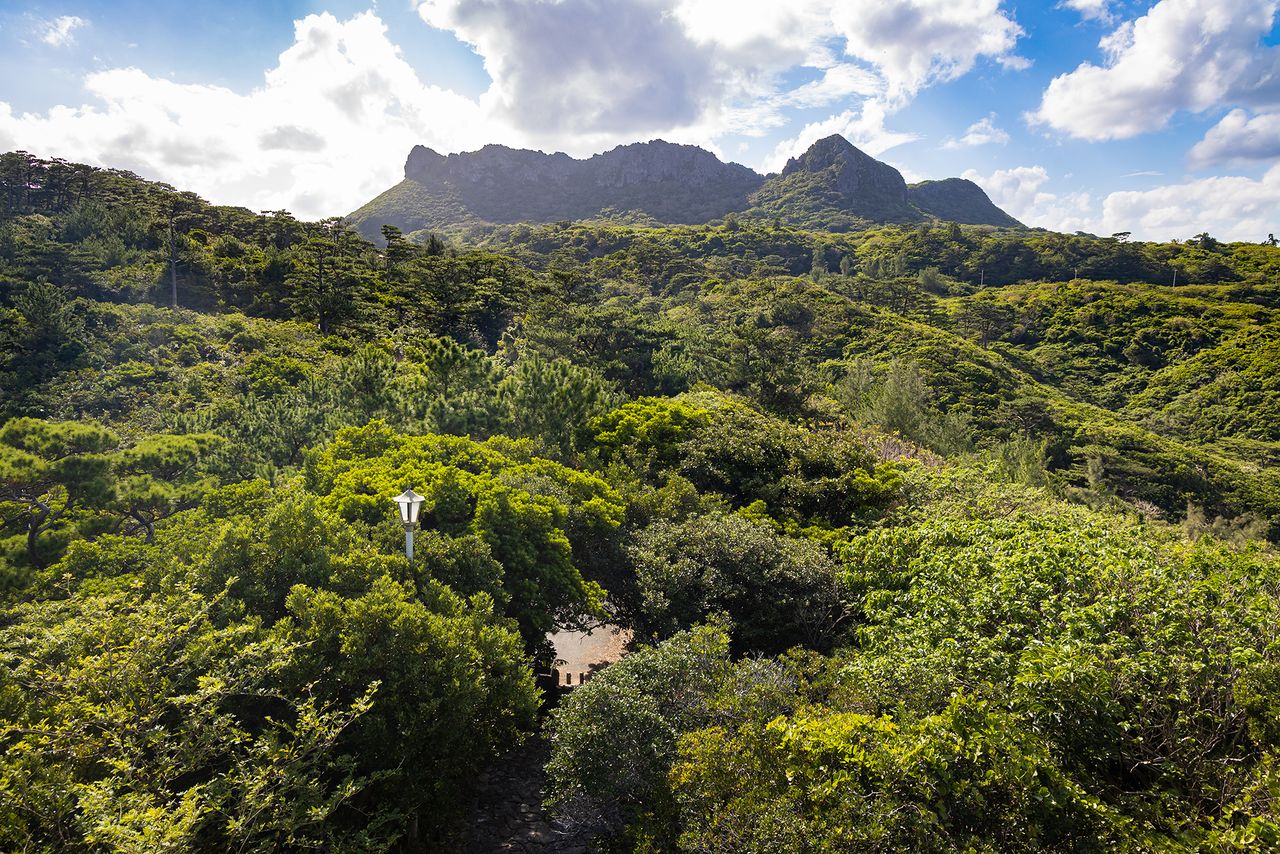
The heart of it on the main island of Okinawa is Yanbaru, the dense subtropical forest that blankets the island's northern third. Unlike heavily developed southern Okinawa, this stretch of Okinawa's main island stays genuinely wild. Much of it is protected within Yanbaru National Park (officially Yambaru National Park), established in 2016. The wildest core zones are off-limits to keep the rarest species safe, but plenty of trails, waterfalls, mangrove boardwalks, including the largest mangrove on the main island, and viewpoints are open to visitors.
The endemic stars: animals you'll find only here
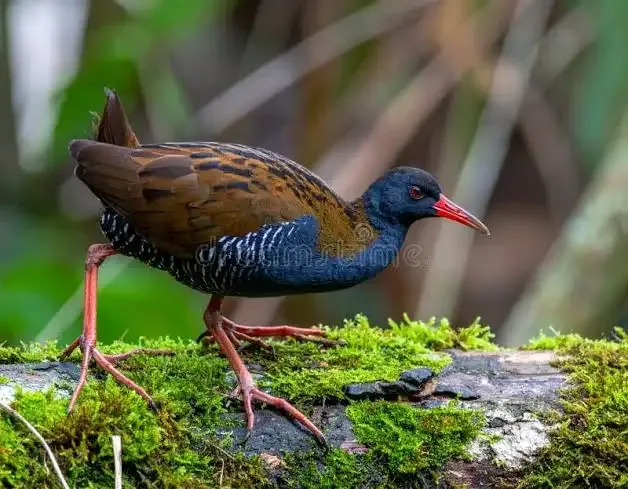
The Okinawa rail (Yanbaru kuina)
If Okinawa's wildlife had a mascot, this would be it. The Okinawa rail, known locally as the Yanbaru kuina, or Yanbaru rail, is a chicken-sized, near-flightless bird with a bright red bill and matching legs, found only on the island of Okinawa. It was only described by science in 1981, which tells you how tucked-away its forest home really is.
It lives only in the forests of Yanbaru, and it's an endangered species. Population estimates vary depending on who's counting and when, but recent surveys land somewhere between roughly 700 and 1,500 birds. You'll spot its image everywhere up north, on road signs, mascots and warning markers urging drivers to slow down, because cars are one of its biggest threats.
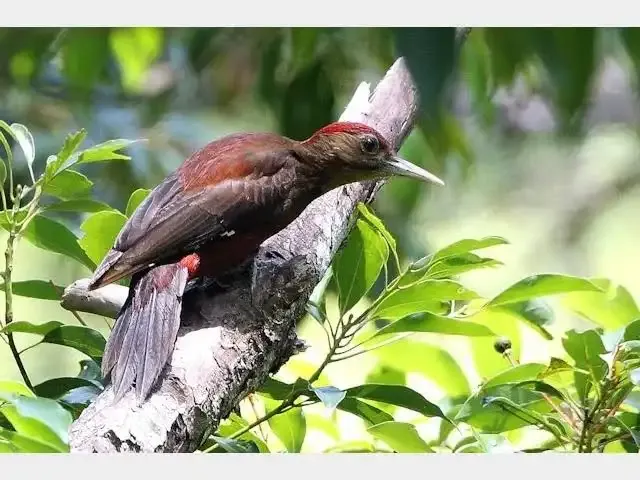
The Okinawa woodpecker
The Okinawa woodpecker (also called Noguchi's woodpecker) is one of the rarest woodpeckers on the planet and the official bird of Okinawa Prefecture. Deep reddish-brown with a flash of colour, it needs old-growth forest to survive, which ties its fate directly to Yanbaru's oldest trees.
For years it was considered critically endangered. Encouragingly, recent conservation work, protecting forest and controlling invasive predators, has helped its numbers stabilise, and its outlook has improved. It's still rare, with likely fewer than 600 birds, and best looked for in spring when it's nesting.
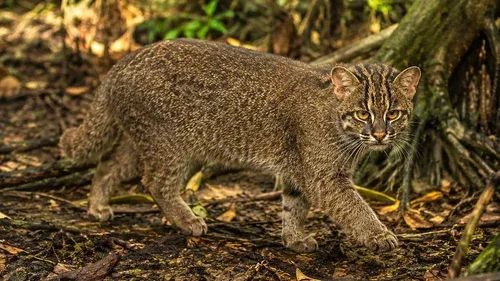
The Iriomote cat
Head down to the Yaeyama Islands and you enter the domain of the Iriomote cat, a small wild cat found only on the island of Iriomote. About the size of a house cat but stockier, with a long tail and a dark, dappled coat, it's one of the world's most endangered cats, listed as critically endangered on the IUCN Red List, with recent estimates putting the population at only around 100 animals.
Seeing one is genuinely rare; they're nocturnal and elusive. The most reliable way to learn about them (and possibly glimpse one) is to visit the island's wildlife conservation centre and drive its roads slowly after dark, watching the verges.
The smaller endemics you'll actually meet
Not every special animal here is a needle in a haystack. A few are easy encounters if you know when to look.
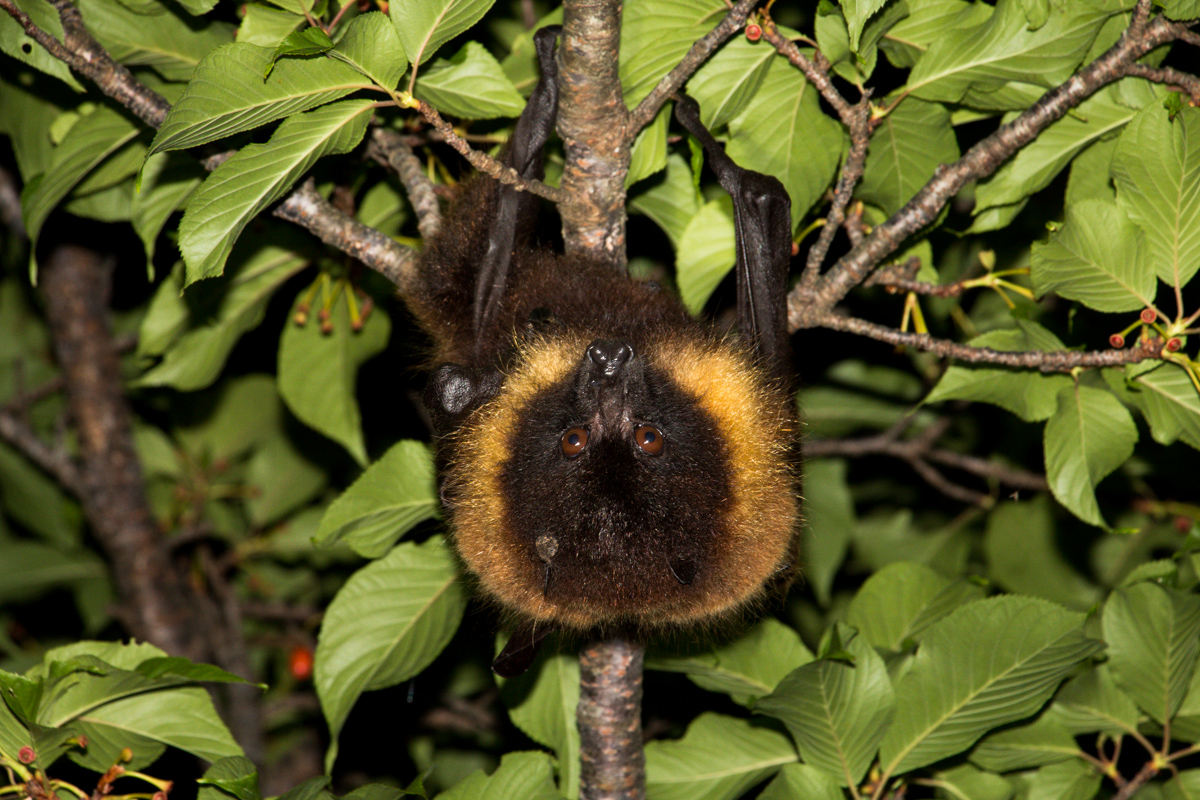
The Ryukyu flying fox is a large fruit bat with a wingspan that surprises first-timers, head out at dusk and you'll often see them flapping between the treetops, feeding on fruit. The Ryukyu robin is a handsome ground-dwelling songbird, easiest to hear and see at dawn. The Ryukyu black-breasted leaf turtle is a small forest turtle, designated a natural monument, that potters along the damp forest floor after rain. After heavy rain the forest also comes alive with endemic frogs, the jewel-green Ishikawa's frog, one of Japan's most beautiful frogs, is found only in these hills.
And out in the Kerama Islands, keep an eye out for the Kerama deer, a compact, dark subspecies of sika deer, protected as a national natural monument, and famous for swimming between islands.
Marine life: a quick word
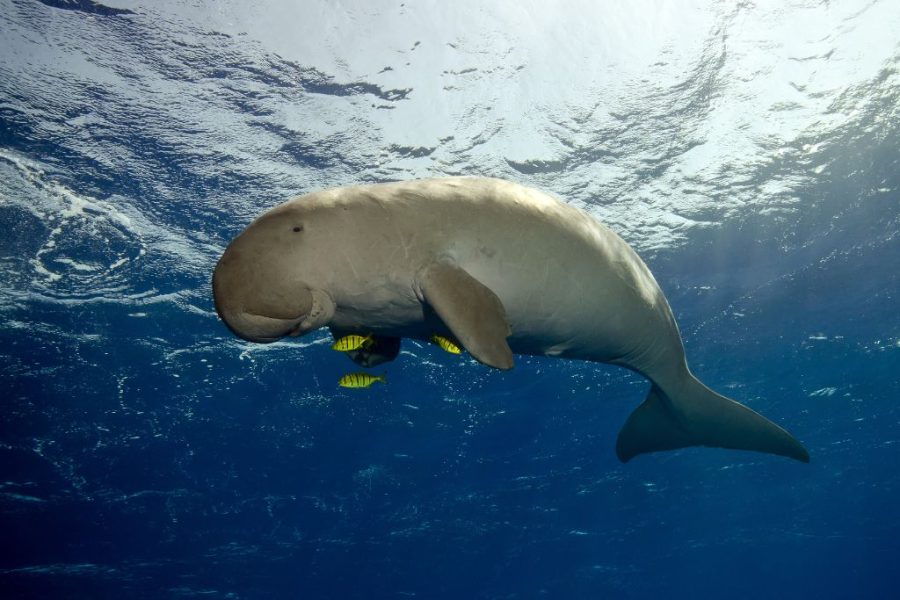
Okinawa's waters are as biodiverse as its forests, sea turtles, dazzling reef fish, and the coral reefs themselves, among the finest in Japan. There's even the dugong, a gentle seagrass-grazing relative of the manatee.
The Okinawa dugong is critically endangered and now extremely rare; it sits at the northern edge of the species' range, and confirmed sightings around the main island have all but disappeared. Its status is also a sensitive subject locally, tied to ongoing construction near one of its former feeding grounds at Henoko.
Because the reef deserves its own deep dive, including how to snorkel or scuba dive it responsibly, we cover the marine side in detail separately.
Dangerous animals in Okinawa: respect, not fear
Let's clear this up, because it's the thing travelers Google most: yes, Okinawa has a few animals that can hurt you. No, they shouldn't keep you out of the forest or the sea. A little awareness handles almost all of the risk.
On land: the habu
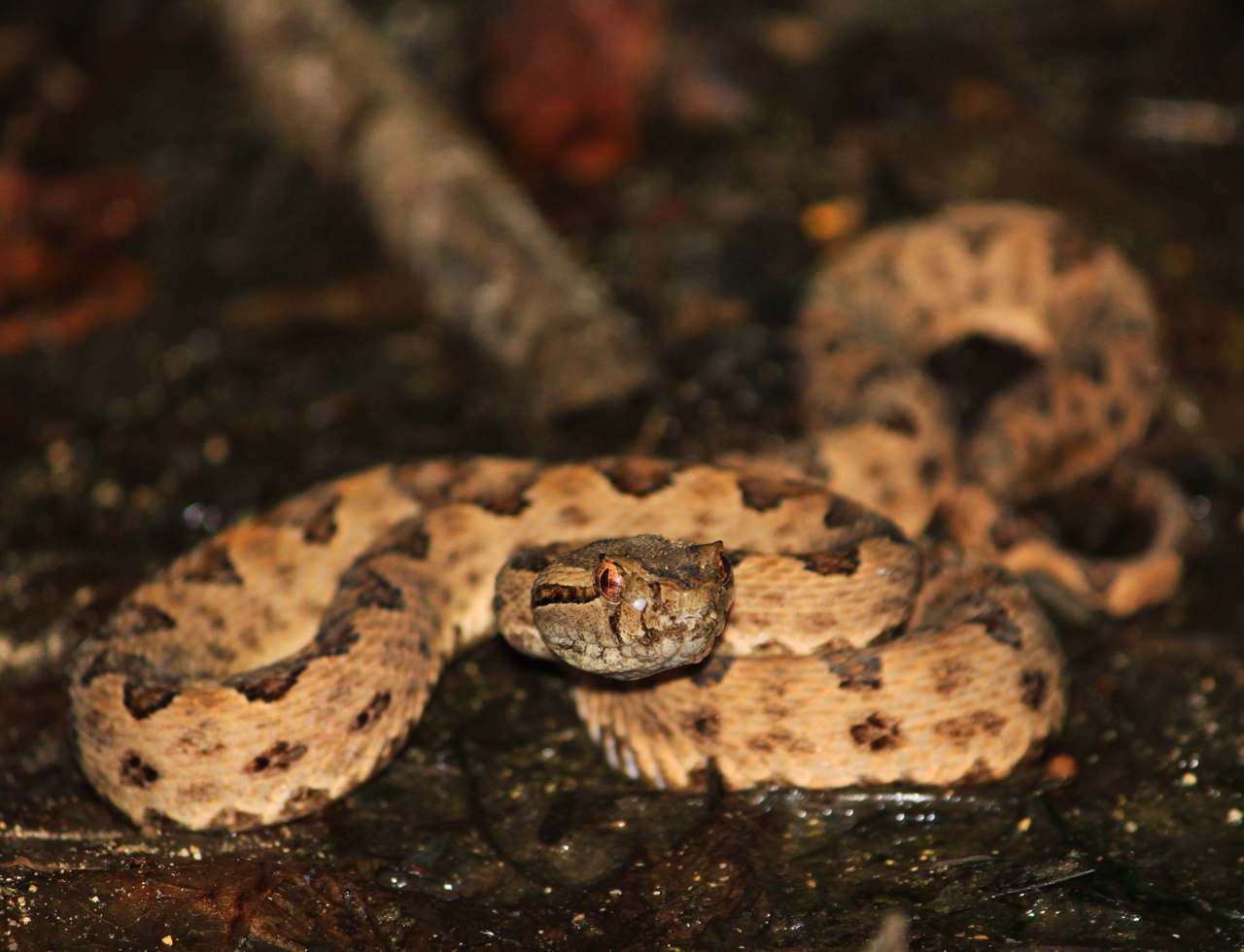
The habu is a venomous pit viper, and the main reason to watch where you put your hands and feet in the countryside. It's nocturnal, so it shelters by day in undergrowth, stone walls, old tombs and cane fields, and comes out at night.
Bites are painful and can cause serious tissue damage, but with prompt hospital treatment they're very rarely fatal these days. The habu is just one of several types of snakes in Okinawa, but it's the only one most visitors need to think about. The rules are simple: stay on clear paths, wear closed shoes on night walks, carry a light, and never handle a snake, even one that looks dead.
If someone is bitten, keep them calm and still, don't run (movement spreads the venom faster), skip the old tricks, no tourniquet, no cutting, no sucking, and get to a hospital straight away. Antivenom is available and effective.
In the water: jellyfish, stonefish and cone snails
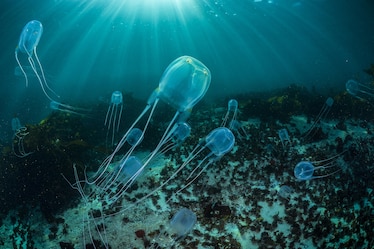
The box jellyfish, locally, the habu kurage, is the summer swimmer's thing to know. Okinawa runs an official jellyfish advisory each year, generally from June 1 to September 30, covering the warm months when these jellyfish drift inshore. Their sting is very painful and, rarely, dangerous.
The easy fix: swim inside the jellyfish nets at managed beaches, where most stings simply don't happen, and consider a rash guard. If you are stung, get out of the water calmly, don't rub the area, douse it generously with vinegar to neutralise the stingers, then cool it and seek medical help.
Two more "look, don't touch" creatures live on the reef. The stonefish is a master of camouflage that rests on the bottom and delivers an intensely painful sting through its spines if you step on it, so watch your footing and don't go barefoot over rocks. The beautiful cone snail fires a venomous dart and should never be picked up, no matter how pretty the shell. The lionfish, with its fanned venomous spines, and the occasional sea snake, usually docile, but never one to handle, round out the group; admire them from a respectful distance.
The golden rule across all of them: watch where you step, keep your hands to yourself, and let the wildlife be wildlife.
Where and when to see wildlife responsibly
Timing is everything here, because most of Okinawa's headline animals are creatures of dawn, dusk and dark.
Yanbaru (northern Okinawa Island) is your best bet for the rail, the woodpecker, the robin, the flying fox and the leaf turtle. The birds are most active in the early morning; the mammals and roosting rails come into their own after sunset. A guided night drive along the forest roads, moving slowly, keeping lights low, never baiting or handling anything, is the classic way to see the most in one outing: roosting rails, fruit bats overhead, a wild boar shuffling across the tarmac, maybe a Ryukyu scops owl calling from the dark. (For getting up to the north and where to base yourself, see [internal link: northern Okinawa & Yanbaru area guide].)
Iriomote Island and the Yaeyama Islands, much of them protected within Iriomote-Ishigaki National Park, are the place for the Iriomote cat, plus fireflies, flying foxes and rich mangrove life alive with crabs and birds. Drive slowly after dark and scan the roadsides.
The Kerama Islands deliver the Kerama deer alongside some of the clearest water and best reefs in the prefecture.
Whatever you do, the responsible approach is the same: minimal light, minimal noise, no feeding, no touching, and no chasing an animal for a photo. The best sightings come to those who wait quietly.
Conservation and the responsible traveler
Okinawa's rarest animals are hanging on partly because visitors help, or at least don't hurt. A few small choices make a real difference.
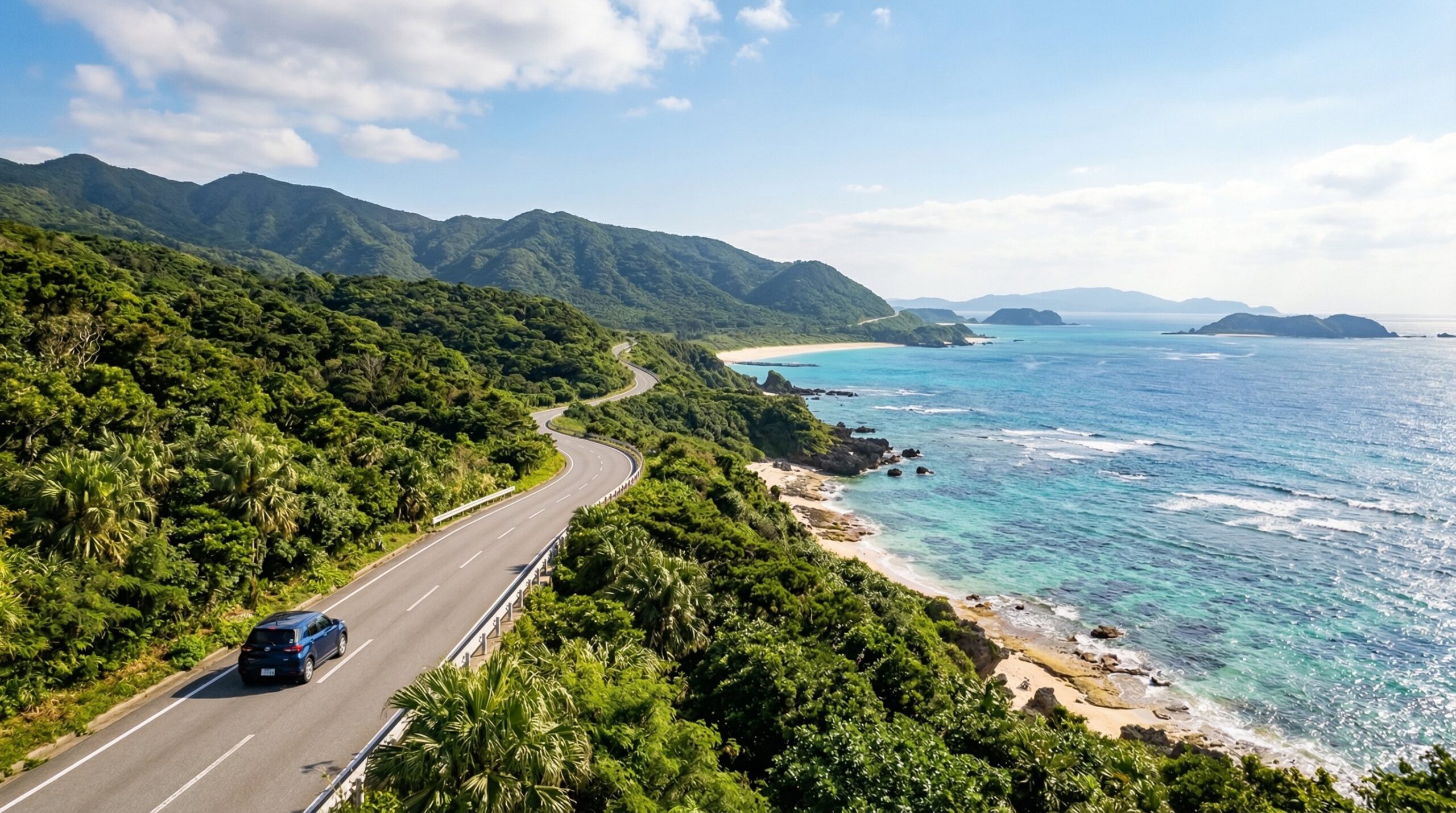
Drive slowly, especially at dawn and after dark. Roadkill is one of the biggest human threats to the Okinawa rail, the Iriomote cat and the leaf turtle. The winding northern roads have wildlife crossings and warning signs for a reason; easing off the accelerator is one of the simplest conservation acts a traveler can perform.
Understand the invasive-species story. Decades ago, the small Indian mongoose was introduced in the hope it would control the habu. It didn't, the two animals barely cross paths, and instead the mongoose began eating native wildlife. The good news is that wildlife protection programs are working: the invasive mongoose was declared eradicated on nearby Amami-Ōshima in 2024, and captures on Okinawa Island have fallen dramatically, with native species starting to recover their range, a recovery local Okinawans have worked hard to drive. Free-roaming cats remain a threat in the forest, which is why northern villages now ask cat owners to keep pets indoors, microchipped and registered.
Stay on trails, take only photos, and never collect plants or animals. Poaching of rare turtles, orchids and beetles, among them the Yanbaru long-armed scarab beetle, one of Japan's largest and a legally protected species, feeds an illegal pet trade that remains a genuine problem here.
When to visit for wildlife: a quick seasonal guide
- Box jellyfish: most present in summer, with an official advisory running roughly June 1 to September 30. Swim inside the nets during these months.
- Fireflies: a spring event. On the Yaeyama Islands the tiny dwarf firefly typically appears around March to May, glowing for only about half an hour after sunset; around Naha, look for fireflies from about May into July.
- Birds: the Okinawa woodpecker nests late February through May, and the Okinawa rail breeds through spring into early summer, a lovely time to visit, though it's also when rails are most at risk on the roads, so drive with extra care.
- Habu: active year-round but livelier in the warm, wet months, so stay alert on night walks in late spring and summer.
Frequently asked questions
What animals are unique to Okinawa?
Okinawa is home to many endemic species, animals found nowhere else, including the flightless Okinawa rail, the Okinawa woodpecker, the Iriomote cat, the Ryukyu long-furred rat, the Ryukyu robin and the Ryukyu leaf turtle. Their isolation on these islands over millions of years is what makes them so distinctive.
Are there dangerous animals in Okinawa?
A few, but they're easy to avoid with basic care. On land, the venomous habu snake is the main one; in the sea, watch for box jellyfish in summer, and avoid touching stonefish, cone snails and lionfish. Serious incidents are rare when you take simple precautions.
Are there venomous snakes in Okinawa?
Yes, the habu, a nocturnal pit viper, lives in Okinawa's countryside and forests. Stay on clear paths, wear closed shoes at night, don't reach into undergrowth or stone walls, and never handle a snake. If bitten, stay calm and still and get to a hospital immediately; effective antivenom is available.
Where can I see wildlife in Okinawa?
The Yanbaru forest in the north of the Okinawa main island is the top spot for rare birds and mammals; Iriomote in the Yaeyama Islands is home to the Iriomote cat; and the Kerama Islands offer the Kerama deer and superb reefs. Most animals are best seen at dawn, dusk or on a guided night tour.
When is the best time for wildlife watching in Okinawa?
Early morning and after dark are best, since many species are nocturnal. Spring brings nesting birds and fireflies; summer is peak season for marine life but also for jellyfish. Aim for dawn birdwatching and evening or night tours for the widest range of sightings.
What is the Yanbaru kuina (Okinawa rail)?
It's a near-flightless, endangered bird endemic to the Yanbaru forest of northern Okinawa, recognisable by its red bill and legs. First described by science in 1981, it's become a symbol of Okinawa's wildlife and its conservation efforts.
Can tourists see the Iriomote cat?
Rarely, it's nocturnal, elusive and critically endangered, with only around 100 individuals. The best approach is to visit Iriomote's wildlife conservation centre to learn about it and drive the island's roads slowly after dark, though sightings are never guaranteed.
Is it safe to swim in Okinawa with jellyfish around?
Generally yes, especially if you swim inside the jellyfish nets at managed beaches during the summer advisory period (roughly June to September). If stung by a box jellyfish, leave the water, apply vinegar, cool the area and seek medical help.
Is Okinawa good for eco and wildlife tourism?
Very much so. With UNESCO World Heritage forests, endemic species and a growing network of responsible guided experiences, Okinawa rewards travelers who want to connect with nature, as long as they tread lightly and put the animals first.
A last word before you go
Okinawa's beaches will always be the headline, and they've earned it. But the islands' real magic might be the quieter stuff, a red-legged bird crossing a forest road at dawn, a fruit bat crossing the dusk sky, a hillside pulsing with fireflies for two weeks in spring.
Almost none of it exists anywhere else on the planet. Go looking for it slowly, respectfully and at the right time of day, and you'll come home with the kind of memory no beach can match, and you'll have helped keep it here for the next traveler, too.
Evertrail Tours · July 21, 2026